
Over the past few weeks, I’ve received some questions about whether Saint-Lazare’s infrastructure can support future growth. Some of those questions were raised following the announcement of the 45 affordable housing units. Rather than answer them one at a time, I thought it would be helpful to explain in detail the planning that has already been done and the work that continues today.
I understand why many residents are worried about losing what they value most about Saint-Lazare. I also understand why growth raises concerns.
Twenty-eight years ago, I chose to raise my family here for many of the same reasons many of you did: the trees, the space and the quality of life. That’s exactly why these decisions matter so much to me. Protecting Saint-Lazare’s character while preparing responsibly for the future isn’t a contradiction. It’s the responsibility we’ve been entrusted with.
The Role of a Municipality
At a glance
-
- Land use planning is one of a municipality’s core responsibilities.
- Municipalities have to operate within provincial laws and regional planning frameworks.
- Growth can’t simply be prohibited.
- Council’s role is to guide how growth occurs while protecting Saint-Lazare’s character.
It is important to understand the role of a municipality.
One of our fundamental responsibilities given to us by the provincial government is land use planning. We’re responsible for guiding how our territory develops, but we have to do so within the legal framework established by the Government of Quebec, the MRC and the Communauté métropolitaine de Montréal (CMM).
Cities don’t have the legal authority to simply prohibit all development because residents oppose it. Municipalities are creatures of the province. Our powers come from provincial legislation, and we have to operate within what those laws allow us to do.
Landowners have rights, municipalities have obligations, and our planning decisions must respect that framework.
That framework requires municipalities to accommodate growth within the urban perimeter rather than encouraging urban sprawl into agricultural land or outside urban perimeters.
Our responsibility as elected officials is to guide where and how growth occurs within the legal framework that governs municipalities. That means making planning decisions, establishing zoning and environmental regulations, determining appropriate forms of development, reducing impacts wherever possible and preparing the infrastructure needed to support our community.
That’s why we’ve been investing in infrastructure, completing studies, strengthening environmental regulations and preparing long-term planning documents.
Municipal government is also a balancing act. We have to consider the needs of today’s residents while also planning for tomorrow’s residents. Population growth will continue, whether through births, people moving here or broader regional growth. Our responsibility is to prepare for that reality while protecting the qualities that make Saint-Lazare the community people chose to call home.
Not every decision will satisfy everyone, and that’s normal. But every decision should be based on facts, planning, sound governance and the long-term interests of our community.
Planning for Growth
At a glance
-
- Two Special Planning Program (SPP) adopted to guide long-term growth.
- Extensive public consultations with residents and businesses.
- New Architectural Design Guide underway.
- Growth focused within the urban perimeter.
- Stronger environmental regulations in the western sector.
- Long-term planning includes housing, schools, parks, active transportation, infrastructure and environmental protection.
Over the last several years, we’ve undertaken two major planning exercises: the Special Planning Program (SPP) for the village core and the SPP for the Cité-des-Jeunes sector.
These plans establish a long-term vision for the areas where most future growth is expected. They don’t simply identify opportunities for housing. They also plan for active transportation, public spaces, schools, nearby services, commercial development, environmental protection and the infrastructure needed to support these neighbourhoods.
These plans were developed with residents, business owners, professionals and City staff through different public consultation processes. They’ve since been integrated into our urban planning bylaws, meaning future projects must now align with that vision.
We’re also preparing an architectural design guide this year to better frame future development so new buildings better reflect the character and identity of Saint-Lazare.
Long-term planning also includes parks, trails and public spaces. In 2024, the City adopted a Parks Master Plan to guide future priorities and investments. Separately, several parks have already been upgraded in recent years, and other improvements are planned.
Like any planning document, it can evolve over time as community needs change, councils change, priorities are reviewed and new opportunities arise. The same is true for infrastructure projects. Even when a project is planned, its timing can depend on financial capacity, available grants, required authorizations and conditions set by higher levels of government.
Planning also means recognizing that different parts of Saint-Lazare have different roles.
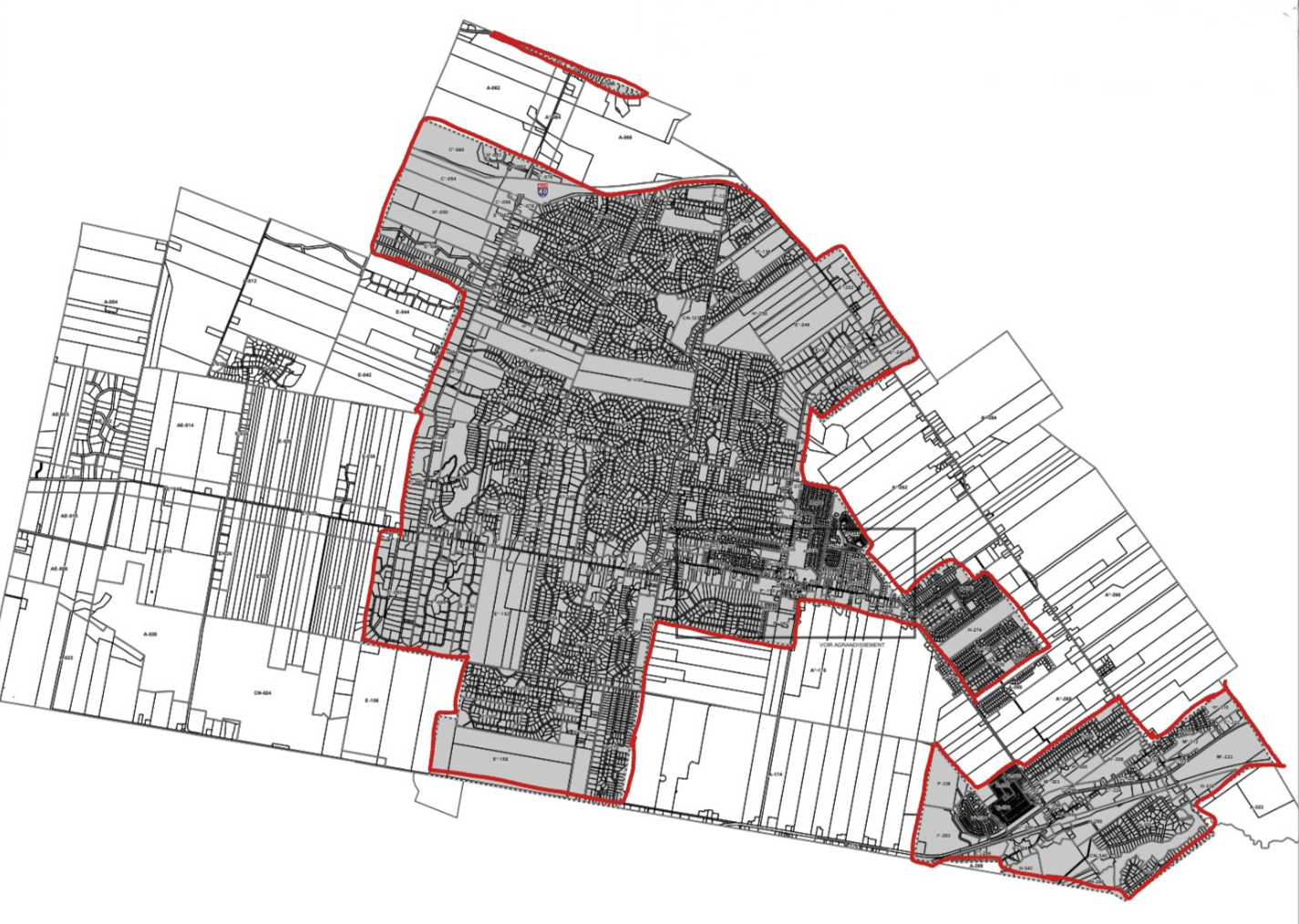
Most future growth is expected within the existing urban perimeter, particularly in the village core and eastern sector. That approach is consistent with the planning framework established by the Government of Quebec, the Plan métropolitain d’aménagement et de développement (PMAD) and the MRC’s land use plan, all of which encourage municipalities to concentrate growth where infrastructure already exists while limiting urban sprawl into agricultural land or outside urban perimeters.
That does not mean there will be no development elsewhere within the existing urban perimeter. Some projects will continue in the western sector where development rights already exist. At the same time, over the last several years, the City has strengthened its environmental regulations to better protect wetlands, forests and natural environments. The objective is not to stop all development, but to reduce its environmental footprint as much as possible.
Under the previous Plan métropolitain d’aménagement et de développement (PMAD), Saint-Lazare benefited from an exemption from certain densification requirements in the western sector, allowing that area to maintain a lower-density housing model in recognition of its rural and equestrian characteristics. That exemption also came with responsibilities, including stronger measures to protect trees, wetlands and the development of conservation planning tools.
With the new Plan métropolitain d’aménagement et de développement (PMAD) adopted by the CMM last year, this will need to be reviewed again. The City will have to work with the MRC and the CMM to determine how the new requirements will apply, where density can realistically be accommodated within the urban perimeter, and whether the western sector can continue to be treated differently because of its particular characteristics. At this stage, that work is still ahead of us and we have no certainty coming from the CMM.
West of Côte Saint-Charles, the situation is different. This area is outside the urban perimeter. Under the current planning framework, it is not intended for urban development as no new roads can be built. Aside from limited uses permitted under existing regulations, such as homes along existing roads and agricultural or equestrian uses, this is not where future residential neighbourhoods are planned.
Planning for growth is about balancing what residents value today with what our community will need tomorrow.
Drinking Water
At a glance
-
- 17 municipal wells.
- 7 different aquifers.
- More than 50 monitoring wells.
- Water treatment plant modernized in 2015.
- 3 new wells added in 2022.
- 2 additional wells expected in 2026.
- Water network is continuously monitored and managed.
I often hear concerns that Saint-Lazare is running out of water. I also hear that all of our drinking water comes from one large underground reservoir. Neither is the case.
Our drinking water comes from 17 municipal wells distributed throughout the municipality. These wells draw water from seven distinct aquifers, which do not all share the same characteristics. Some are located near the surface, while others are deeper or found in fractured bedrock.
For more than 20 years, Saint-Lazare has been studying and managing its groundwater. Today, more than 50 pumping and observation wells are part of our monitoring network. Simply put, if one well or aquifer is under greater pressure, we can pause pumping there and rely more on other wells with available capacity. That gives the more stressed aquifer time to recover and helps protect our long-term water supply.
We have also continued investing in our water infrastructure. In 2015, the Sainte-Angélique water treatment plant was modernized, nearly doubling its production capacity while increasing treated water storage and improving efficiency.
Investments continue. Our current three-year capital plan includes replacing the emergency generator at the Sainte-Angélique water treatment plant, an investment of approximately $300,000.
Capacity has also increased. Three new municipal wells were brought into service in 2022, and two more are expected this year. Our hydrogeological model, which evaluates future demand, groundwater recharge and climate change, is being updated to reflect this added capacity. Preliminary estimates indicate that these new wells will significantly increase our water supply capacity, and the updated model expected later this year will confirm the long-term projections.
Having more capacity does not mean unlimited water use. During hot, dry summer periods, and when outdoor water usage is at its peak, one of the biggest challenges facing many Québec municipalities is not simply how much water is available, but how quickly treated drinking water can be produced and distributed during peak demand.
That is why watering restrictions may still be necessary. They are part of responsible water management to ensure drinking water remains available for essential needs and fire protection.
This is also why we place so much emphasis on water conservation. Under Quebec’s Stratégie municipale d’économie d’eau potable, municipalities are expected to reduce water consumption, improve the performance of their water network and actively manage leaks and water losses.
One of the objectives is to bring Quebec’s water consumption closer to levels seen in Ontario, where per capita use is significantly lower. Meeting these requirements is also important because compliance with the Strategy is linked to eligibility for certain provincial infrastructure funding programs.
No aqueduct system is maintenance-free either. Pipes age, equipment must be replaced and leaks occur. Under Quebec’s Stratégie municipale d’économie d’eau potable, municipalities are expected to monitor water losses, repair leaks, maintain their networks and continually improve system performance.
Our planning therefore includes both increasing capacity and protecting the resource. The two go hand in hand.
Wastewater
At a glance
-
- 8 pumping stations.
- Wastewater treatment plant upgraded in 2022.
- Capacity planned for existing and future serviced areas.
- Space reserved for a fifth treatment pond if needed.
- Frontenac sewer project completed.
- Bédard pumping station upgrade underway.
Wastewater infrastructure is another area where we have continued to invest and plan ahead.
It’s important to remember that a large part of Saint-Lazare is still served by private septic systems. Municipal sewers are mainly found in our more densely developed areas (downtown and east sector), which is why infrastructure planning depends on the sector being discussed.
We also continue to expand the network where it makes sense. The Frontenac sanitary sewer project which was done in 2022-2023 is a good example. It included approximately 10 km of new sanitary sewer mains, giving more than 360 properties access to a long-term municipal wastewater system. As part of the same project, the City also extended part of the drinking water network along Cité-des-Jeunes to complete a loop, improve fire protection and provide drinking water service to more than 30 existing properties.
Today, Saint-Lazare has eight pumping stations that transport wastewater from homes and businesses connected to the municipal sewer system to our wastewater treatment plant.
The wastewater treatment plant was originally built in 1996 and upgraded in 2022. That upgrade was not only about replacing aging equipment. It was also designed to meet the needs of properties already connected to the sanitary sewer system, while adding capacity for sectors that are currently serviced or may be serviced in the future.
The treatment plant currently uses four aerated ponds in the east sector of the city to treat wastewater. There is also space and capacity to add a fifth pond in the future if it becomes necessary. At this time, we are not forecasting an immediate need for it, but it is important that this option exists as part of our long-term planning.
We’re also working on another important project: the Bédard pumping station. Since 2022, we’ve been working on the engineering, environmental studies and government authorizations needed to increase its capacity. This project will improve the performance of the sanitary sewer network, restore capacity where it’s needed and better position the system for the future.
Like our drinking water system, wastewater infrastructure doesn’t happen overnight. These projects require years of studies, engineering, environmental approvals and investment.
Infrastructure Investments
At a glance
-
- Developers generally pay for infrastructure required by their projects.
- The City invests in infrastructure that benefits the entire community.
- Long-term investments guided by the Municipal Asset Management Plan.
Another question I often hear is who pays for the infrastructure needed to support new developments.
The answer is that it depends on the type of infrastructure.
Under Bylaw 1145, when a new development requires municipal infrastructure, the developer is generally responsible for paying the cost of the on-site infrastructure, new roads, the connections to the existing municipal network (aqueduct, wastewater, etc.), the engineering plans, professional studies, inspections, environmental work and other costs associated with making the project possible.
The City, on the other hand, continues to invest in infrastructure that benefits the community as a whole. That includes projects such as upgrading pumping stations, expanding water capacity, maintaining roads, replacing aging infrastructure and making strategic investments.
We are also currently developing the City’s Municipal Asset Management Plan, an initiative encouraged by the Government of Quebec. This long-term planning tool helps municipalities better understand the condition and prioritize maintenance, replacement and upgrades based on needs, levels of service, available funding and long-term sustainability. Like many of our other planning initiatives, its objective is to help ensure infrastructure investments are made proactively rather than reactively.
Road Infrastructure and Mobility
At a glance
-
- Sainte-Angélique redevelopment planned since 2020.
- Annual resurfacing program.
- Traffic studies required for new developments.
- Developers may be required to fund road improvements.
Roads are one of the concerns I also hear about.
Planning road infrastructure is about much more than paving roads. It is about improving safety, preparing for future growth and creating streets that better serve everyone.
A good example is the redevelopment of chemin Sainte-Angélique between Saint-Jean-Baptiste Street and Chevrier Road. Feasibility studies for this project began in 2020.
The project should include sidewalks, cycling infrastructure, safer intersections, improved street lighting, landscaped green buffers, undergrounding portions of the electrical and telecommunications network, and a complete redesign of the corridor to improve safety, accessibility and the overall quality of the village core.
Projects of this scale require years of planning, engineering, studies and, in this case, the acquisition of small portions of private lots needed to widen the municipal right-of-way.
Road planning has two parts: improving existing roads and planning for future development. In established neighbourhoods, road improvements can sometimes be limited because the streets are already built. Depending on the situation, improvements may include signage, traffic calming measures, pavement markings, traffic lights or targeted road improvements.
For new developments, the City has additional tools. Under Bylaw 1145, developers may be required to submit a traffic impact study. Based on the results, the City may require the developer to carry out or contribute to road improvements needed to reduce its impacts before the project moves forward. The bylaw was also strengthened in recent years to require developers to construct and pave the new roads associated with their projects.
Road maintenance is also part of our long-term planning. Every year, the City invests in resurfacing roads, with priorities established through road condition assessments and other objective criteria to ensure investments are made where they are needed most.
Schools
At a glance
-
- Schools are planned by the Centre de services scolaire.
- The City shares development forecasts and population projections.
- Two new French elementary schools have been identified as a future need.
- Municipalities may now be required to provide land for new schools.
Schools are another important part of planning for growth. While the City does not build or operate schools, we work closely with the Centre de services scolaire by sharing planning information, development forecasts and population projections. This helps them anticipate future needs and plan for additional capacity as our community evolves.
The French school service centre has also identified the need for two new French elementary schools in Saint-Lazare in the coming years.
Under the current provincial framework introduced in 2022, municipalities may be required to provide land for new schools. This has become an important issue across Quebec, as many municipalities believe that acquiring land for education infrastructure should remain a provincial responsibility. Several municipalities and municipal organizations have since called for changes to this law. Several political parties for the fall provincial election are talking about removing this responsibility as part of their political platform.
Environmental Protection
At a glance
-
- Multiple environmental studies completed.
- Stronger environmental bylaws adopted.
- Growing Greener approach introduced.
- 70% conservation / 30% development in designated sectors.
- Wetlands, forests and ecological corridors better protected.
- Environmental protection integrated into long-term planning.
Protecting Saint-Lazare’s natural environment has also been a major part of our planning over the last several years.
Before changing regulations or planning future growth, the City invested significant time in understanding our territory. We completed and updated numerous studies and planning documents, including our Conservation Master Plan, environmental characterizations, sustainable development planning, the two Special Planning Program (SPP), hydrology studies and, more recently, the 2025-2030 Conservation Action Plan. These studies helped identify forests, wetlands, ecological corridors, groundwater recharge areas and other natural features that should guide future development.
These studies provided the scientific basis for updating our regulations and helped identify the areas that are most important to protect.
Between 2019 and 2022, the City adopted major updates to its bylaws to strengthen the protection of forests, wetlands and biodiversity.
The City also introduced the Growing Greener approach for certain forested sectors. Where development is legally permitted, projects must reduce their footprint by clustering homes and preserving larger connected natural areas. In these sectors, the principle is that up to 30% of the area may be developed, while 70% must remain protected for conservation.
Environmental protection also continues through our planning documents. Both PPUs place significant emphasis on protecting natural environments while planning future neighbourhoods, recognizing that Saint-Lazare’s forests are one of our defining characteristics and an important ecological asset for the entire region.
Protecting the environment does not always mean that no development will ever occur. It means making decisions based on research, strengthening our regulations, reducing impacts wherever possible and protecting the natural features that make Saint-Lazare unique.
Final word
Saint-Lazare will continue to evolve. My responsibility, and that of Council, is to make sure that evolution is thoughtful, responsible and respectful of what makes our community special.
That means planning years in advance, investing in infrastructure, protecting our natural environments and making decisions based on facts and within our legal framework.
I know this was a long article, but I also know these are important questions. I hope this article provides a better understanding of the planning, studies and investments that help prepare Saint-Lazare for the future.